Butterworthing
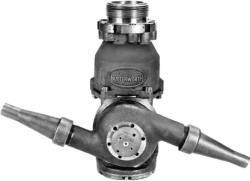 Spraying of cleaning medium (usually sea or fresh water) onto the tank surface by means of a cleaning machine but without addition of any cleaning agent. At least one full cycle of the cleaning machine should be allowed for sufficient cleaning. Additional cycles might be necessary depending on the degree of difficulty of the cleaning operation.
Injection tank cleaning
Injection of the cleaning agent directly into the butterworth line during butterworthing the tank. The quantity to be injected depends on the consumption of the cleaning machines and the concentration, which is usually recommended by the supplier of the cleaner.
Recirculation tank cleaning
Prepare a cleaning solution. Butterworth the tank by internal recirculation. The necessary temperature can be achieved/maintained by means of heating coils, cargo heat exchangers or a butterworth heater.
Recirculation cleaning via service tank
Prepare a cleaning solution in the service tank. Butterworth the tanks to be cleaned with the solution and recirculate the water back into the service tank. Heat the solution with the tank heating coils, cargo heater or butterworth heater.
Rinsing
Spraying of water (usually fresh water) with cleaning machine onto the tank walls in order to rinse chloride containing water and traces of contamination from the tank surface. Typically it is not necessary to run a full circle of the cleaning machine.
Vent – Mop – Dry
Ventilation in order to remove water, moisture and smell. Usually done by forced air circulation. If there are water pools on the tank bottom they should be removed with a mop to reduce drying time. If the next cargo is sensitive to water or moisture, drying must be carried out very carefully.